
Unverified listing
This museum profile was created by Exhibo from public information. It is not managed by the organisation yet — details may be incomplete or outdated.
Museum of the Future
Dubai
Futurology, Technology, Immersive Theatre
About
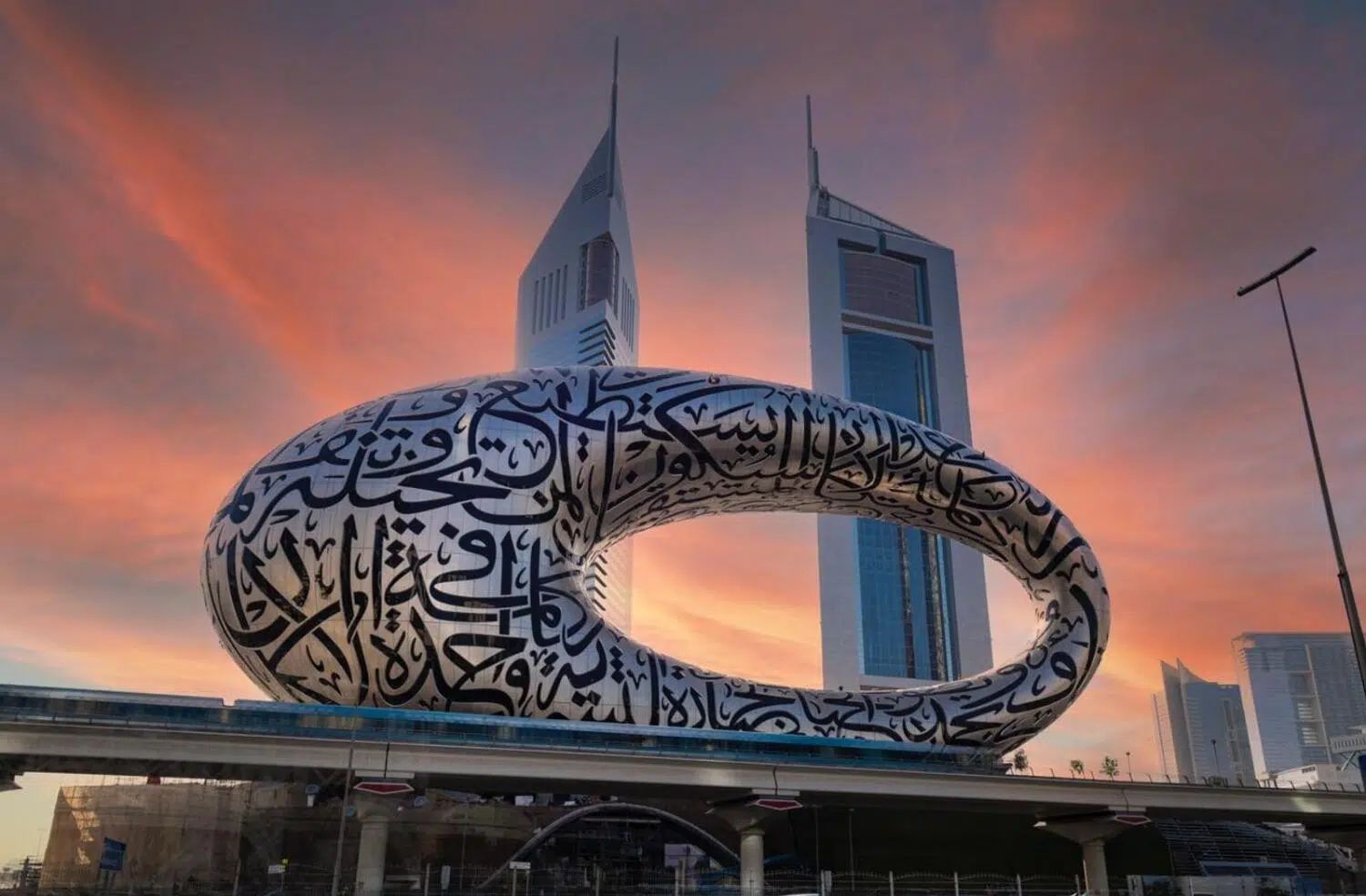
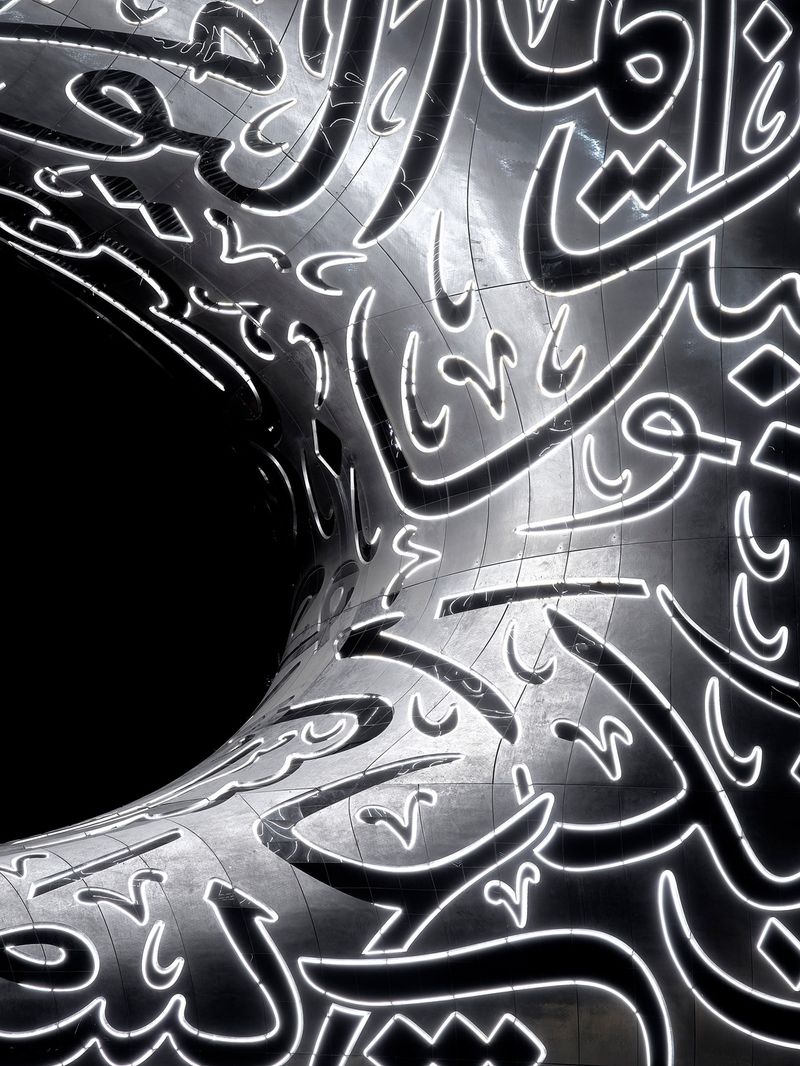
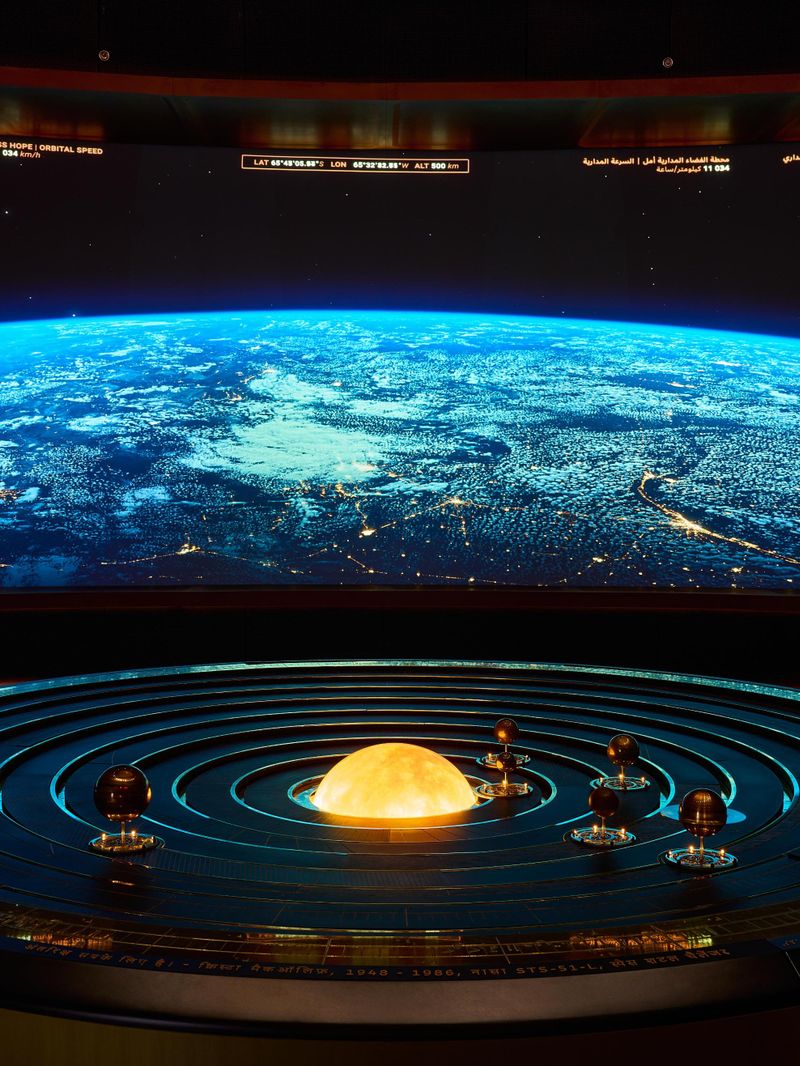
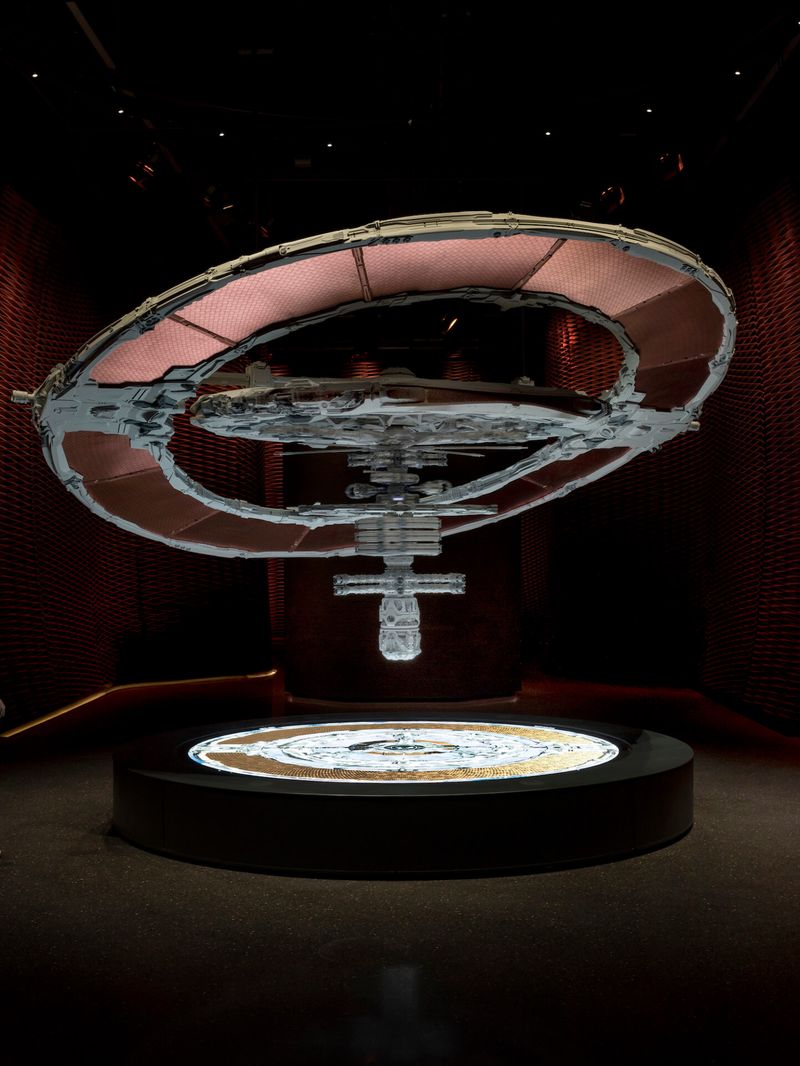
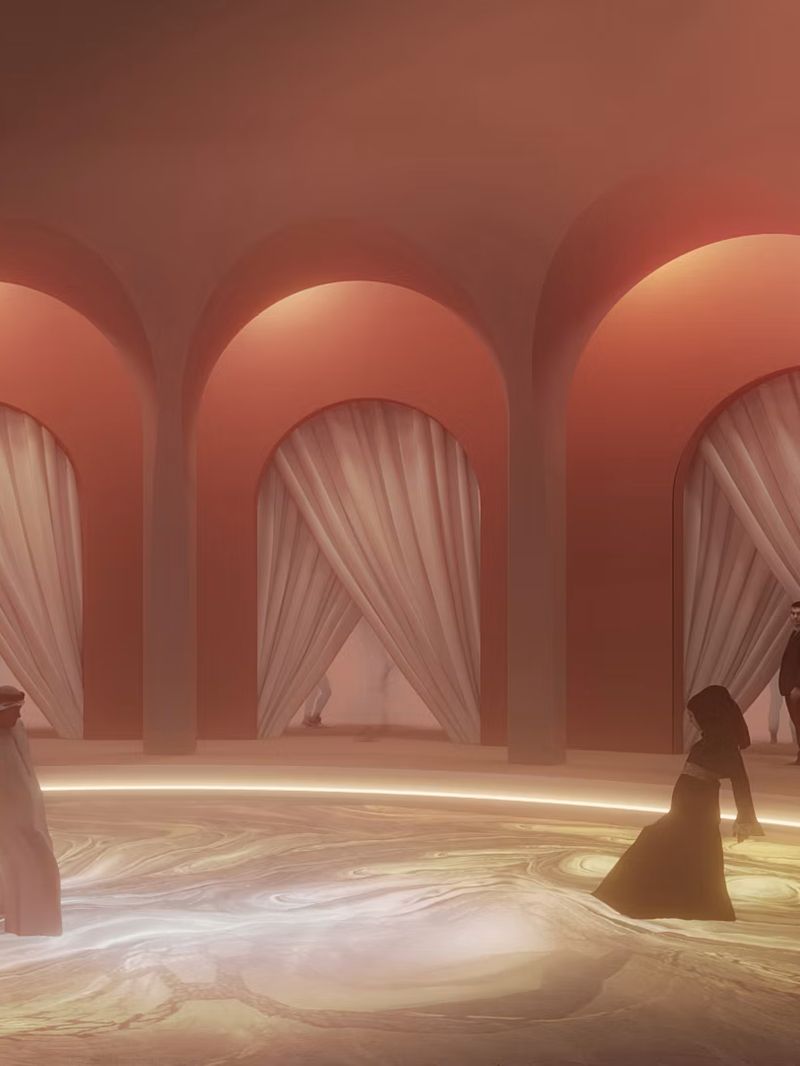
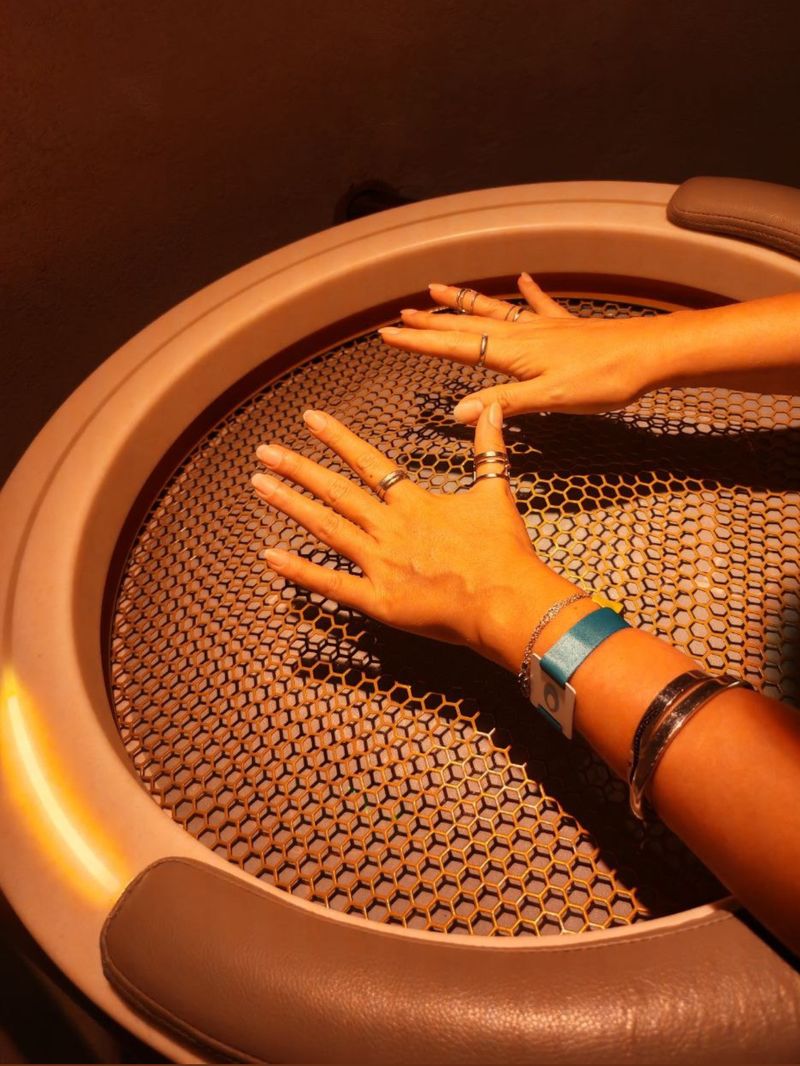
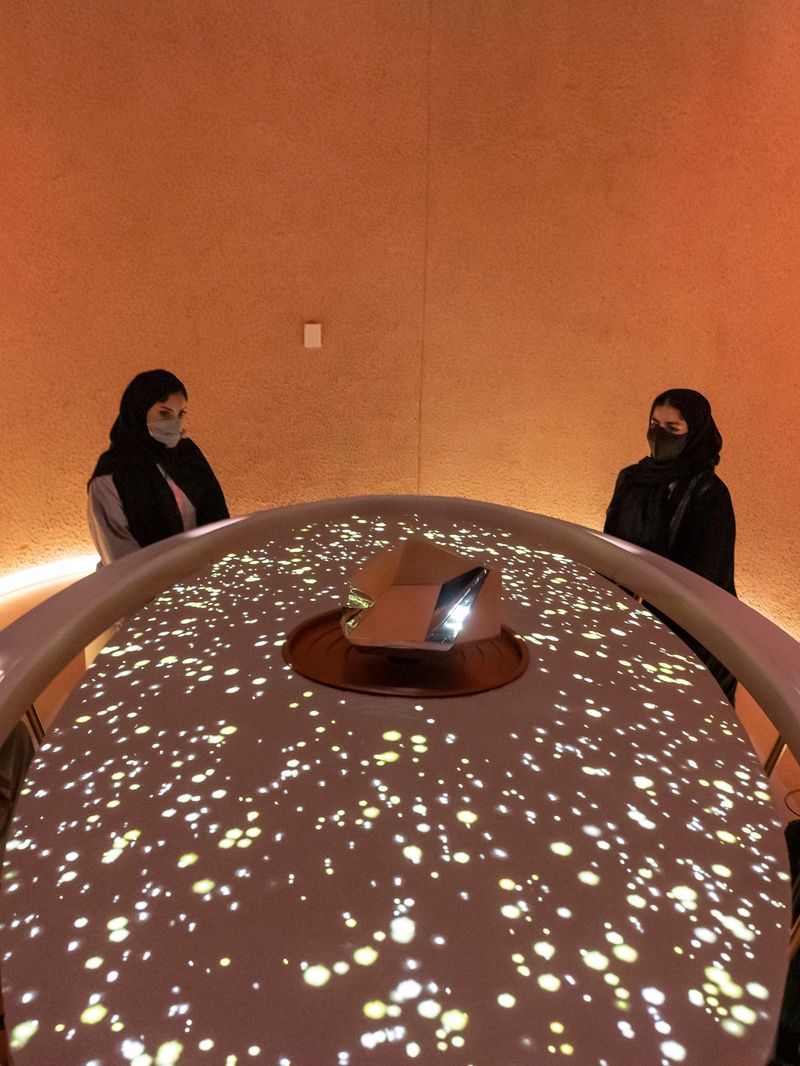
Museum of the Future is a Dubai government institution dedicated to imagining and prototyping what comes next. Opened on 22 February 2022 and operated by the Dubai Future Foundation, it occupies a 77-metre torus designed by Shaun Killa of Killa Design — a hollow steel ring raised on a landscaped podium above Sheikh Zayed Road, its façade clad in 1,024 robot-fabricated stainless-steel panels that carry three lines of Arabic calligraphy by Sheikh Mohammed bin Rashid Al Maktoum. The void at the building's centre is part of the design language: the solid ring stands for what is known, the open space for the future still to be written. Inside, seven floors move beyond the display-case model. The museum's core is "Journey of the Pioneers", a continuous experience set in the year 2071 that carries visitors in sequence through an orbital space station, an ecosystem-restoration institute, and a wellbeing sanctuary, with further floors devoted to near-future technologies and a future-skills landscape for children. Conceived as an authored environment rather than a collection — built by an international team of exhibition designers, technologists and artists — it operates as a working laboratory as much as a destination, running a continuous programme of talks, workshops and research partnerships alongside the visitor experience. It welcomed more than a million paying visitors in its first year.
Why this museum matters
Exhibo editorial
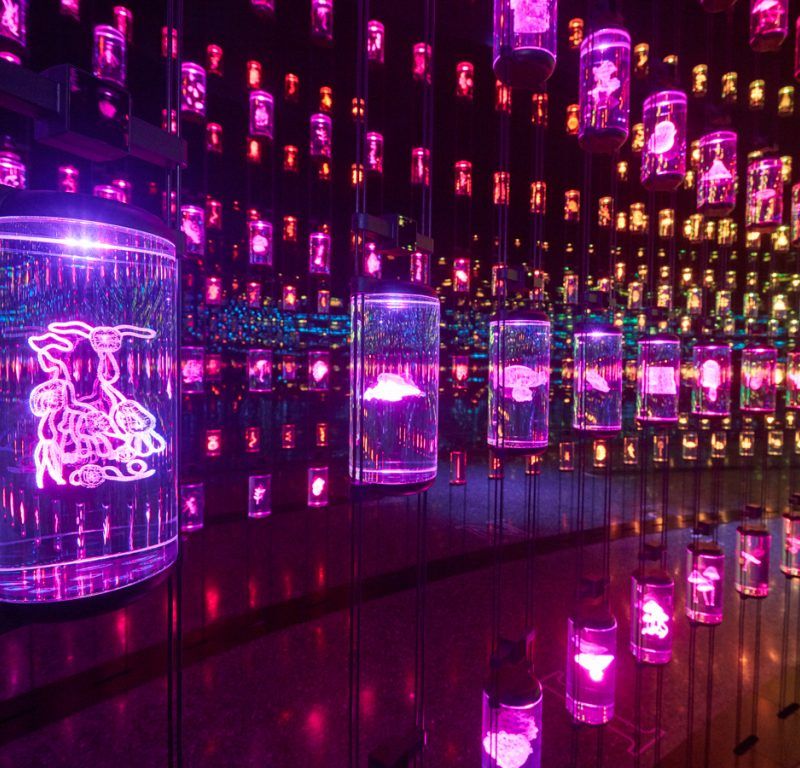
A museum about the future faces a question no other museum has to answer: what do you put inside it, when the subject hasn't happened yet? There are no artefacts to lend, no canonical objects, no inherited collection. Museum of the Future's answer is its defining idea — the visitor does not look at the future but is placed inside it, given a role the moment the doors open and carried through a single continuous world for the better part of three hours. That decision shapes everything. The journey is authored like theatre and paced like cinema: a rocket launch staged inside a lift, a kilometre-wide space station that appears to fold around your capsule as it docks, a library of 2,400 illuminated crystal jars each holding a species alive or extinct by 2071, and then, by design, a final space where the technology falls away and you are simply asked to breathe. The sequence builds an argument rather than a tour — moving from the cosmic to the ecological to the intimate, and insisting throughout that the future is something built rather than awaited, with the visitor cast as one of its builders. Its importance to Dubai runs deeper than its silhouette. This is an institution that draws audiences many cultural venues never reach — families, teenagers, tourists, school groups — and sends them out engaged with climate, biodiversity, artificial intelligence and the question of how a city might live fifty years from now. For a region building its cultural infrastructure at remarkable speed, a place that brings a million people a year to think seriously about tomorrow is doing real cultural work. The future has no collection, so the museum built one out of experience — and in doing so gave Dubai one of the most recognised cultural landmarks in the world.
Exhibitions
Current and upcoming shows at Museum of the Future.
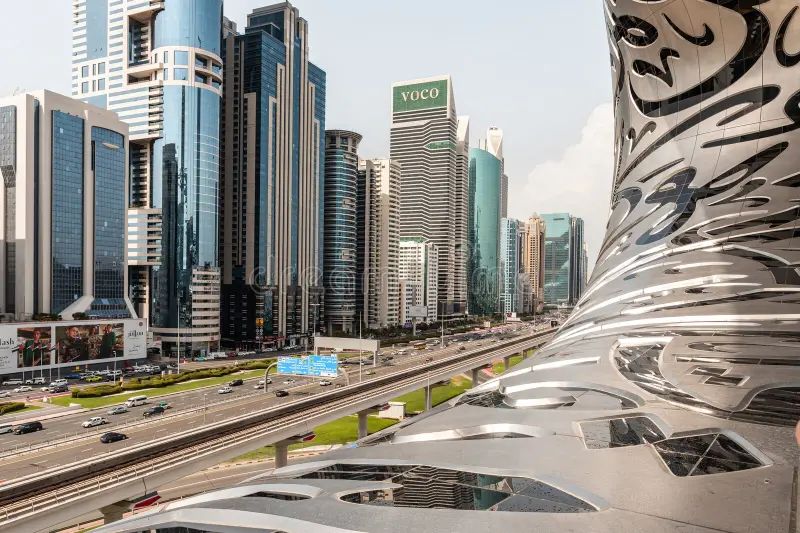
The Viewing Deck
A pause inside the torus
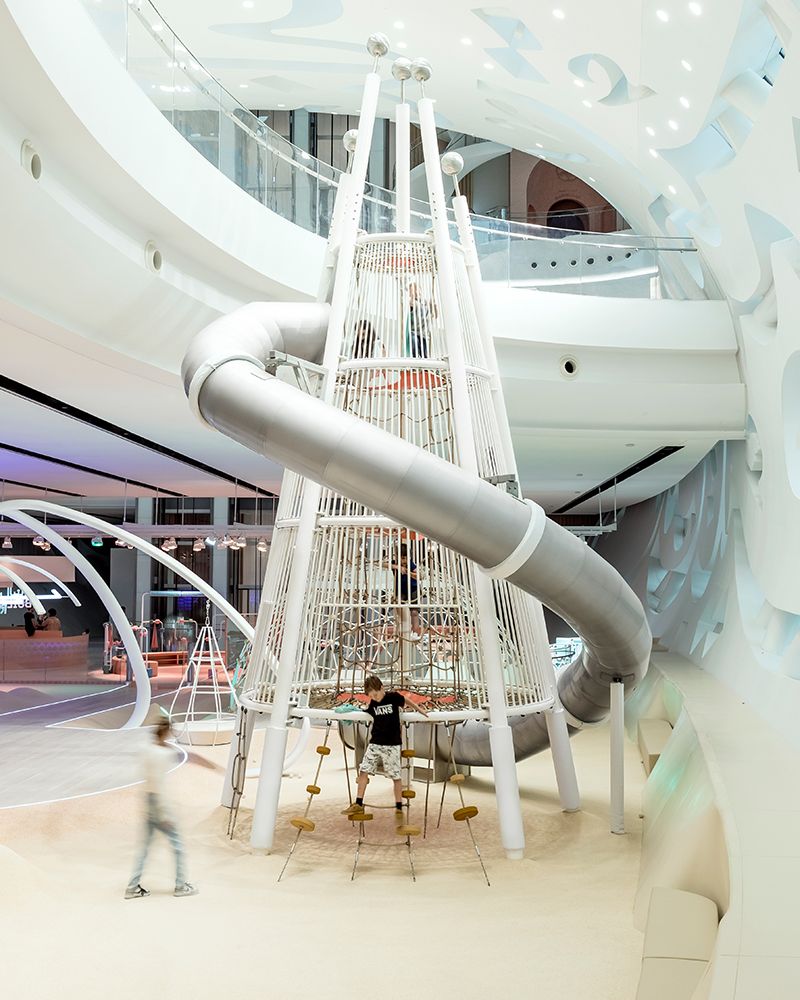
Future Heroes
A future built by children
View exhibition →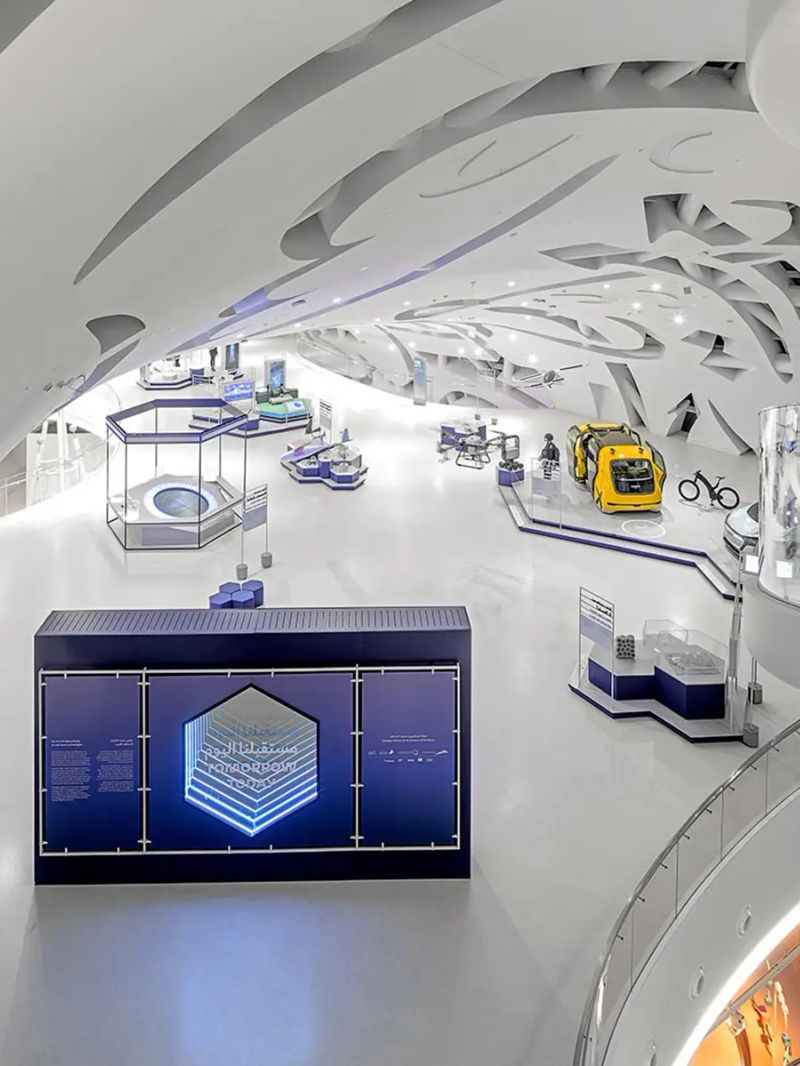
Tomorrow Today
Near-future technology, almost in reach
View exhibition →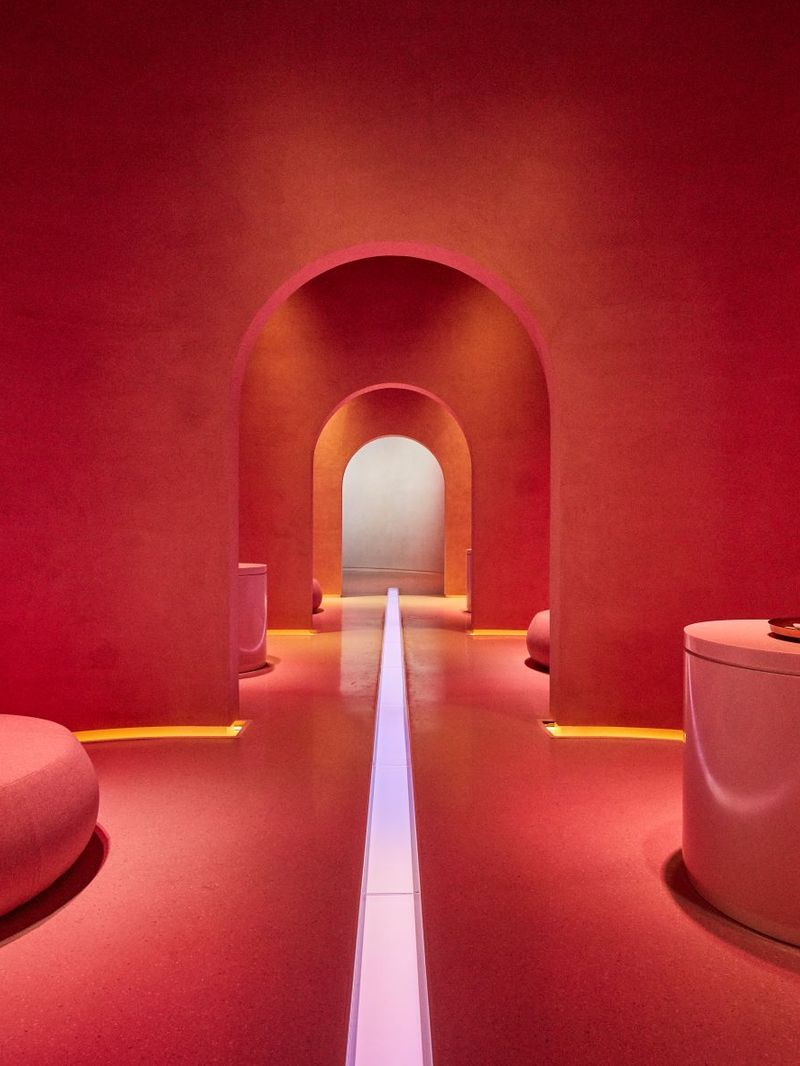
Alwaha
A sanctuary for the senses
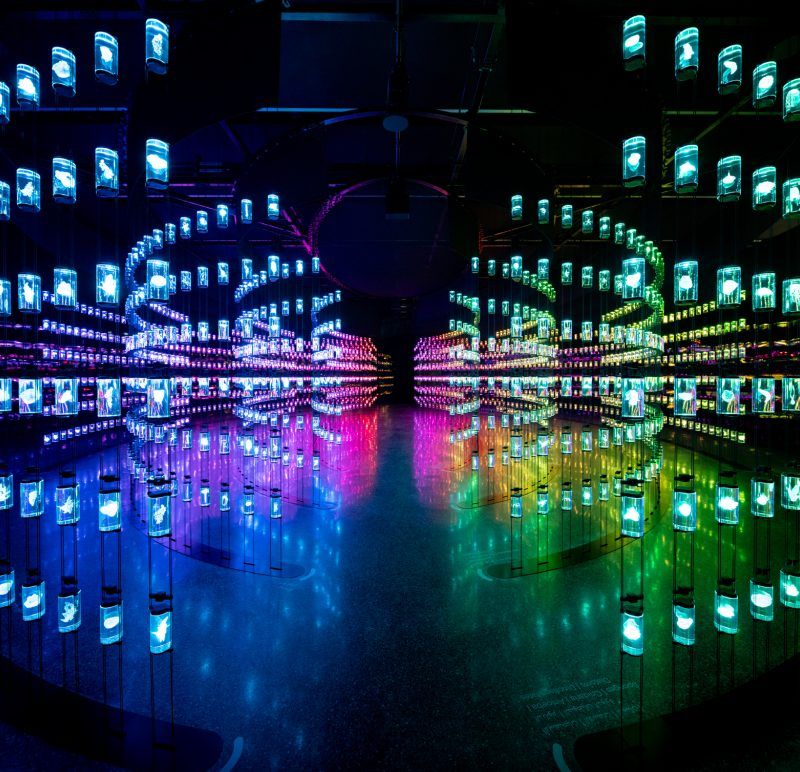
HEAL Institute
Regenerating the living world
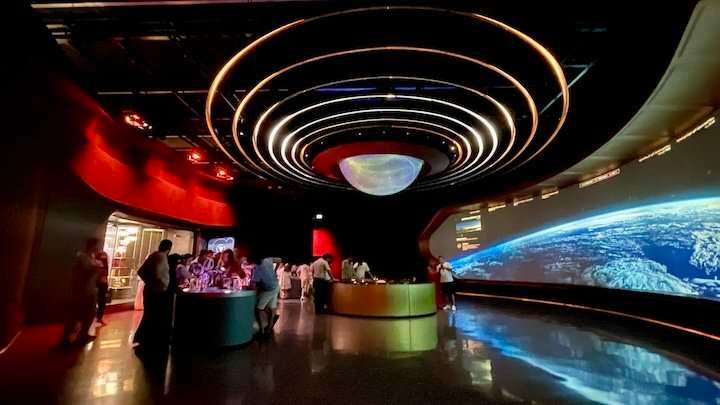
OSS Hope
The orbital colony, 2071
Visit
Hours, tickets, and directions for Museum of the Future.
Address
Sheikh Zayed Road, Trade Centre 2
Opening hours
- Monday
- 10:00 – 19:00
- Tuesday
- 10:00 – 19:00
- Wednesday
- 10:00 – 19:00
- Thursday
- 10:00 – 19:00
- Friday
- 10:00 – 19:00
- Saturday
- 10:00 – 19:00
- Sunday
- 10:00 – 19:00
Admission
- One Vision, Two Futures — 169 AED
General ticket including a complimentary ticket for young pioneers under the age of 4
- One Vision, Two Pioneers — 399 AED
Pioneer Pass including a fast-tracked,
Permanent collection included in museum admission.
Collection
Highlights from the permanent and rotating collection.
People
Historical figures
Founders, patrons, and figures associated with the institution's history.
Mattar Bin Lahej
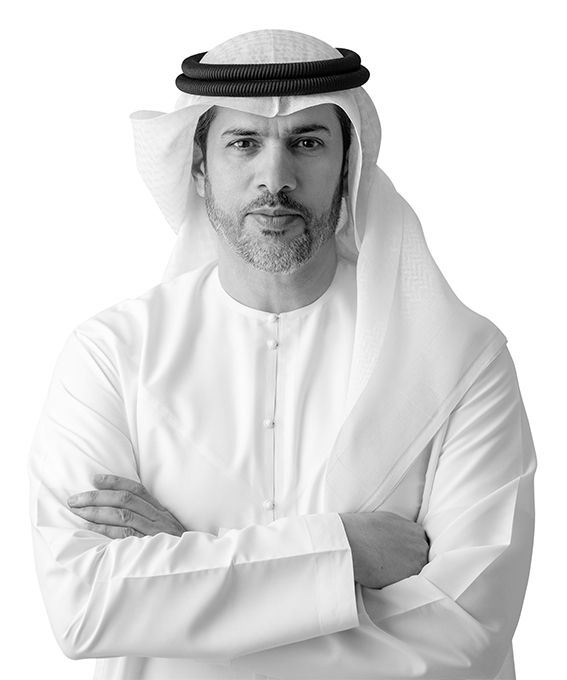
Mattar Bin Lahej, born in Dubai in 1968, is one of the Emirates' most recognisable living artists — a self-taught painter, sculptor, photographer and calligrapher who has spent nearly four decades pulling Arabic script off the page and into three dimensions. His instinct has always run toward art in public space rather than the gallery wall: monumental sculpture, light, steel, and a calligraphy he treats as form and movement as much as language. He founded Marsam Mattar, the first artist-run gallery in the UAE, and developed his own contemporary letterform, the "Mattar Font", which loosens classical Arabic letters toward abstraction. His work has shown in the UK, the US and across the Gulf. He is most widely known for the 14 kilometres of thuluth calligraphy wrapping the Museum of the Future — a commission he describes as the moment his whole career had been building toward. He chose thuluth deliberately, for what he calls its majesty: a script that, in his words, instils awe even in those who cannot read it. The result earned the building its nickname, "the only building that speaks Arabic". For Bin Lahej the project sits exactly on the line his practice has always walked — heritage carried forward rather than embalmed — and, as he puts it, he reached an international stage without ever leaving home.
Shaun Killa
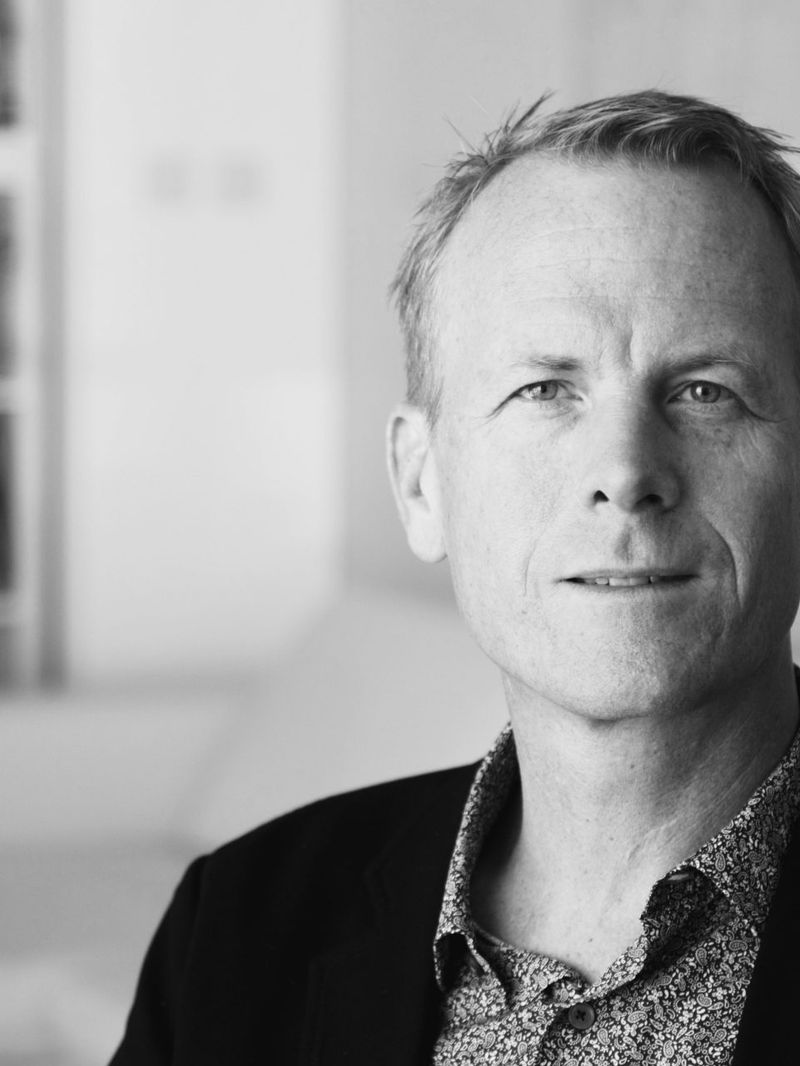
Shaun Killa is a South African–born architect whose buildings have shaped much of how Dubai presents itself to the world. Educated at the University of Cape Town, he moved to the Emirates in 1998 — his first job there was on the interiors of the Burj Al Arab — and spent sixteen years as Director of Architecture at Atkins before founding his own studio, Killa Design, in 2015. His work argues consistently that a landmark and a low-carbon building can be the same thing: his Bahrain World Trade Centre was among the first towers in the world to integrate large-scale wind turbines into its structure, and that marriage of spectacle and environmental engineering has become his signature across towers, hotels and masterplans. His best-known building began as a single late-night sketch. Invited into the 2014 competition for the Museum of the Future, he worked for weeks before clearing the page and drawing the torus, the calligraphy and the landscaped podium in one gesture. He also fought for its location, insisting it sit directly on Sheikh Zayed Road rather than tucked behind Emirates Towers — the difference, as he put it, between a fraction of the city noticing it and all of it. The hand sketch became a column-free steel diagrid, refined through parametric modelling and built with robotic fabrication, and the finished ring is now among the most photographed buildings anywhere.